

Alpana Restaurant · Gold Coast, Chicago
THE A-LIST
All Things Delicious
Recipes · Wine Notes · Cocktail Stories · Seasonal Obsessions
From Alpana Singh and the team at Alpana Restaurant · New issues bi-monthly
Operation Milk Punch
In 1711, a woman named Mary Rockett had an idea. Three hundred years later, our bar director had the same one.
My father would often say to me, "Another harebrained scheme" — which I never fully understood until my latest harebrained scheme: let's make a milk punch.
I've seen them pop up over the last couple of years at some of the finest cocktail establishments, locally and abroad. So in my head, I thought it would be fun. What could be so hard about building a rum-based cocktail and washing it in milk?
Well, filtering it. To start.
A Three-Hundred-Year-Old Harebrained Scheme
Let's take it back to the beginning: who had the original harebrained scheme to put a cocktail in milk and filter it? Actually, it was a scientific solution to a very practical problem — the lack of refrigeration. The earliest recorded milk punch dates to 1711, when Mary Rockett documented her method for filtering rum punch through milk to make it shelf-stable. Her recipe was remarkably balanced — spirit, acidity, and sugars in harmony — and the resulting clear elixir could last for weeks. She began bottling and selling it, shipping it to colonial America.
The drink soon gained popularity among London's elite. Aphra Behn, an author, playwright, and British spy, helped make it more mainstream. And in 1763, Benjamin Franklin published his own milk punch recipe in a newsletter, praising it for its durability on long journeys. Three hundred years later, the technique found its way back into craft cocktail culture — and into our bar program.
The Science (It's Actually Cool)
Here's what happens when you wash a cocktail in milk: the acid in the punch — citrus juice, tea — causes the milk's casein proteins to curdle. Those curds act as a natural filter bed, trapping tannins, pigments, and bitter compounds as the liquid passes through. What comes out the other side is perfectly clear, silky, and mellow — with a subtle sweetness from residual lactose and flavors that have been softened and integrated in a way you simply can't achieve any other way.
The cocktail becomes texturally rich without being heavy. The acidity is present but gentle. Everything is in sharp focus. It is one of the most structurally elegant things you can do behind a bar — which is partly why I couldn't resist trying it.
What's In Ours
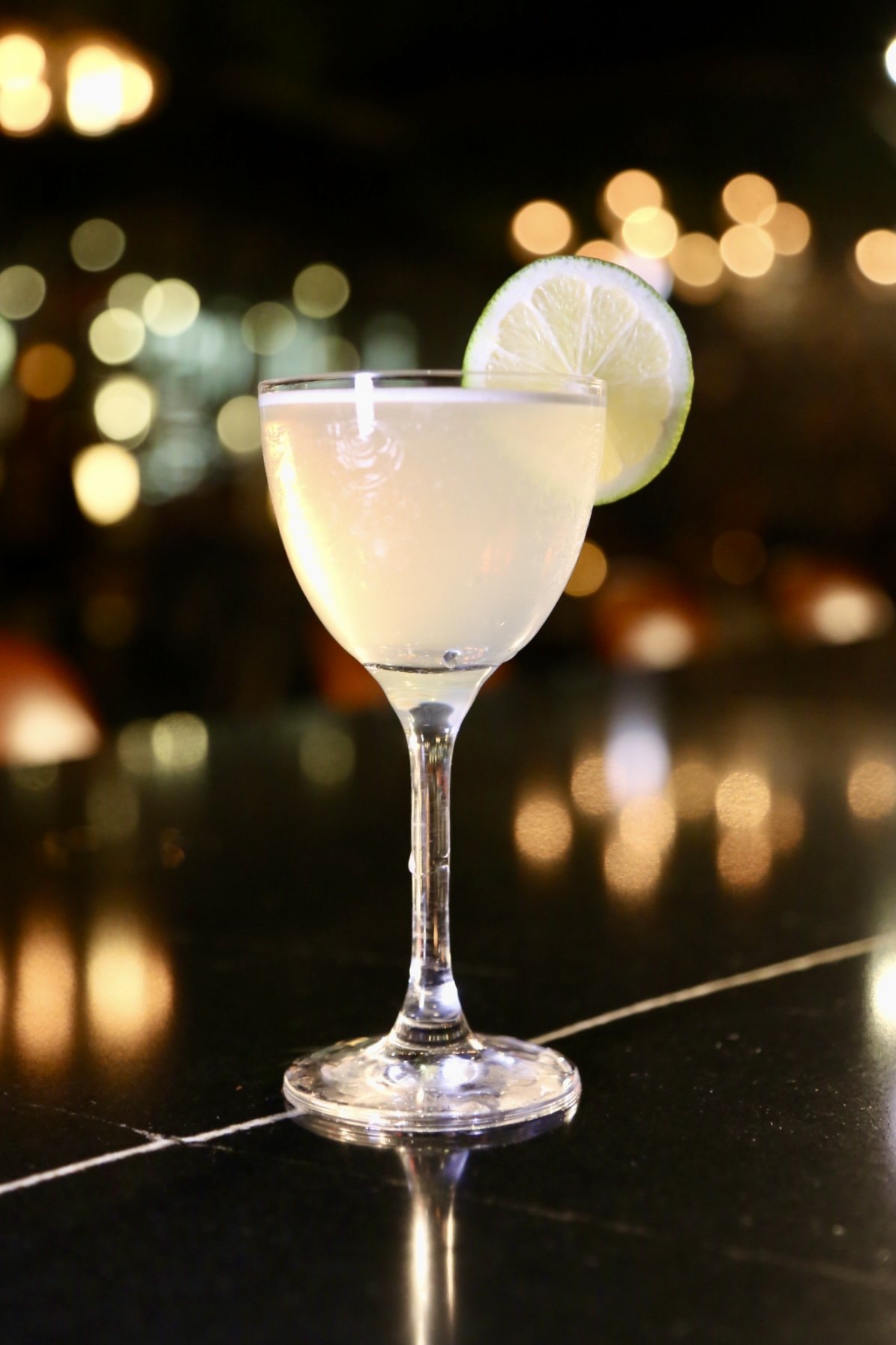
We began with a base of Bacardi 8 Year — the Puerto Rican house's charcoal-filtered aged rum, which brings enough complexity to anchor the cocktail without dominating it. To that, I added Apologue Carrot Liqueur, aiming for a spiced, carrot cake-style warmth. Apologue is made right here in Chicago, in Pilsen — a local ingredient I was glad to work with. Then Chicago's own Rare Tea Cellar coconut chai tea, which threads the whole thing together. Lime and pineapple juice round it out, tying the tropical notes back to the rum and keeping the whole thing bright.
The result has a lot going on — spice, fruit, funk, warmth — but it's remarkably clean. Which, of course, is the whole point of the clarification.
How to Order It
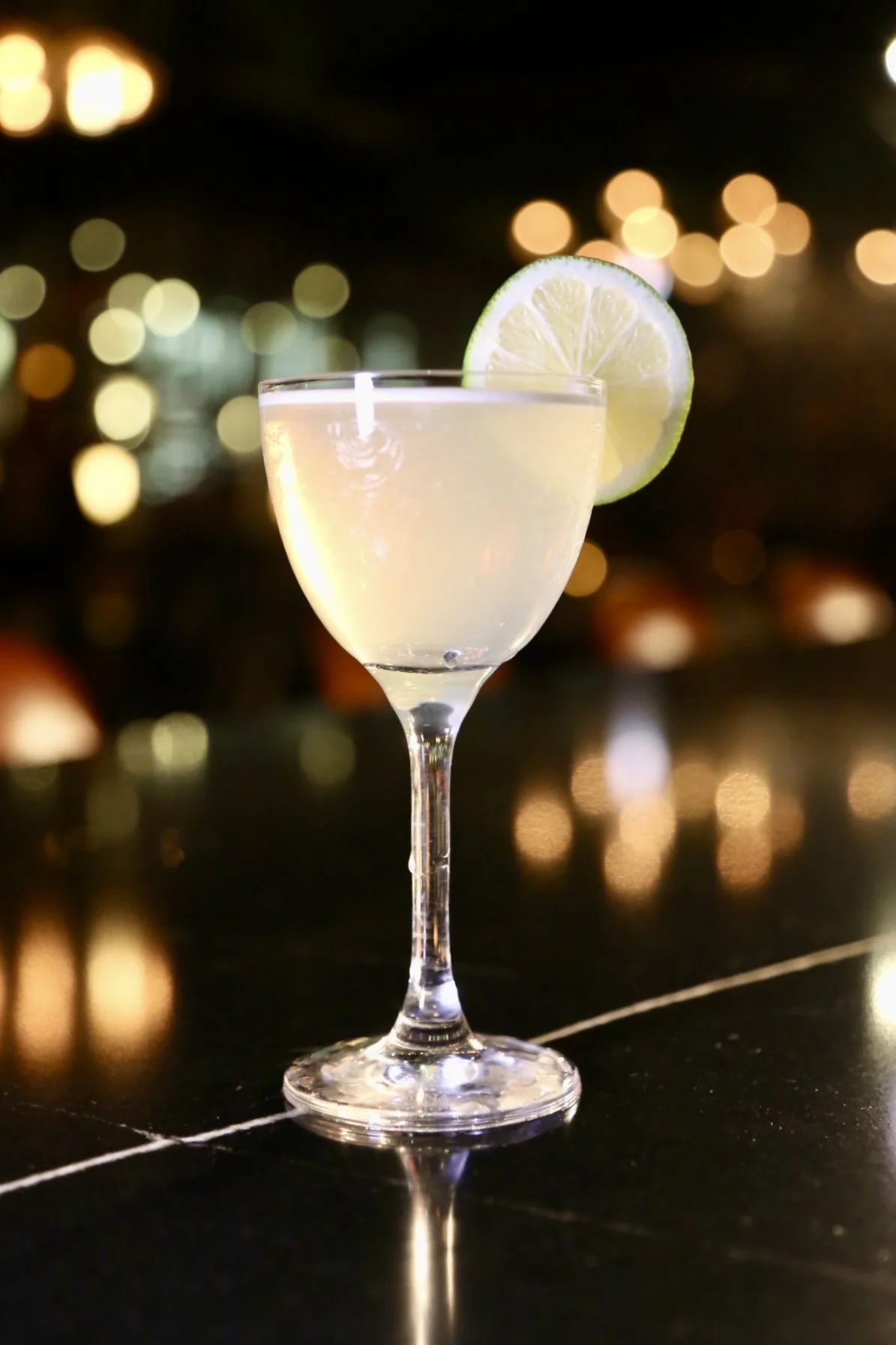
The Milk Punch Daiquiri is on our current cocktail menu. I serve it two ways depending on what you're eating: over a single large cube if you're starting light, or served up if you're heading somewhere richer — the Braised Short Ribs, the Wild Mushroom Ravioli. Either way, it looks like something. And it tastes like something.
Alpana tasted it for the first time on a Tuesday afternoon in the empty dining room, with the afternoon light coming through the window-side room, and she said: "This tastes like spring decided to get serious."
I can't improve on that.
See you at the bar. — Jody